Best Facebook Ads Agency Services for Business Growth and ROI Optimization
Oct 6, 2025
Facebook ads agencies specialize in planning, running, and scaling paid advertising across Meta’s platforms to drive measurable business growth and higher ROAS. They combine strategic audience segmentation, creative production, and performance optimization so campaigns reach the right customers while minimizing wasted spend. By aligning campaign structure, bidding, and measurement to business objectives, a Facebook ad agency turns advertising budget into predictable revenue and improved customer acquisition. This article maps the agency workflow, selection criteria, core services, audience and privacy tactics for 2025, and practical playbooks for eCommerce and lead generation. You’ll learn how agencies manage campaigns, what services top agencies offer, how to evaluate vendors and pricing, and which 2025 trends—like AI creative systems and Advantage+ campaigns—matter most when scaling paid social.
What Does a Facebook Ads Agency Do and Why Hire One?
A Facebook ads agency manages paid social campaigns end-to-end by designing strategy, building audiences, producing creatives, and optimizing performance to achieve client KPIs such as ROAS and CPL. This works because agencies combine data-driven audience segmentation with iterative creative testing and automated bidding to continuously improve conversion metrics. The immediate benefit is faster scaling with measurable results, freeing internal teams to focus on product and fulfillment rather than campaign operations. Below we outline the operational lifecycle agencies typically follow and the tangible advantages clients see when performance marketing is handled by specialists.
Agencies begin with discovery and tracking setup to ensure accurate measurement through the Facebook Pixel or Conversion API, which supports reliable attribution. This measurement foundation feeds audience modeling and bidding strategies, enabling targeted spend allocation and improved conversion rate. Understanding onboarding and tracking leads directly into how agencies run campaign operations day-to-day.
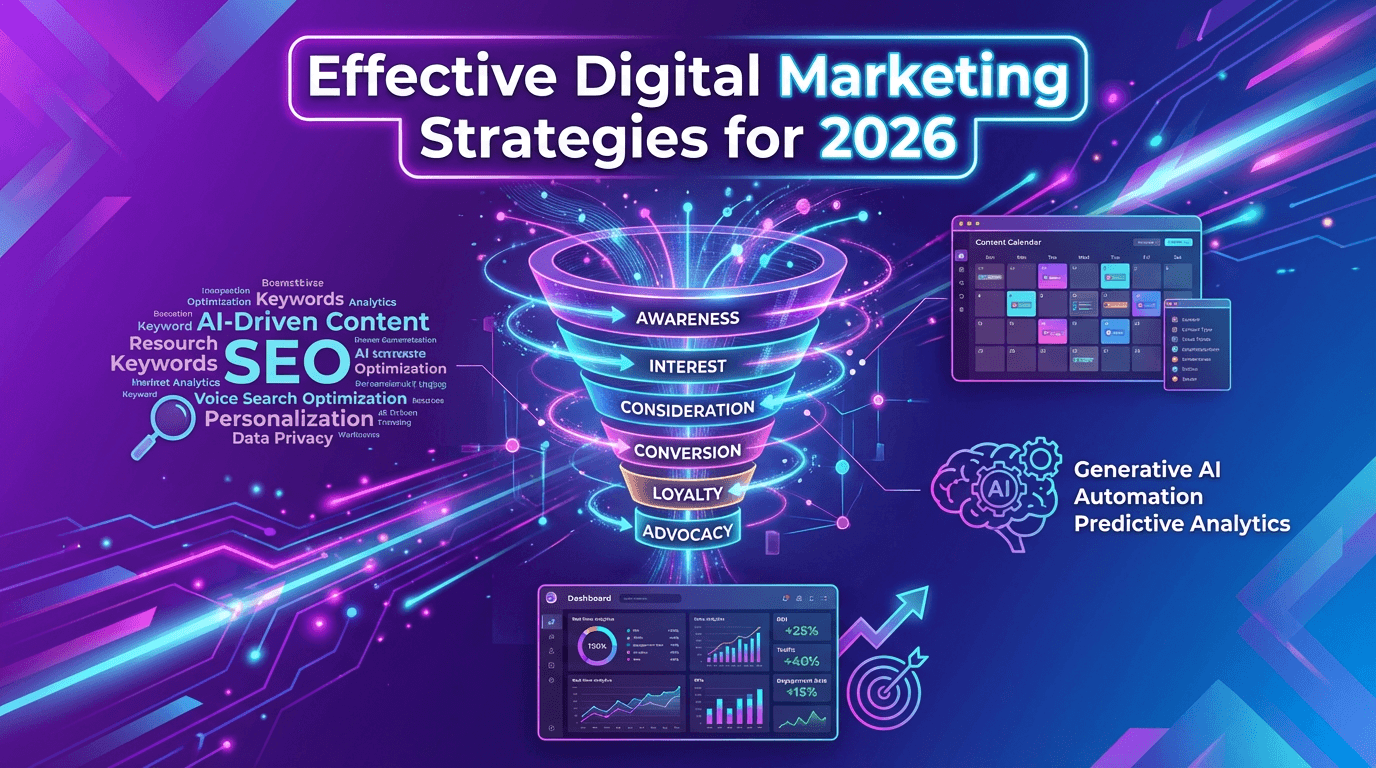
Agencies then structure campaigns into TOF-MOF-BOF funnels, establishing creative tests and audience cohorts to validate messaging. Campaign architecture, budget pacing, and bidding controls are iterated weekly to preserve ROAS while scaling. These operational steps set the stage for ongoing reporting and strategic shifts when performance plateaus.
For organizations that need performance lift without hiring in-house specialists, agencies provide expertise, tools, and scaled creative pipelines that shorten time-to-scale. The next section shows the granular campaign management steps agencies execute during onboarding and optimization.
For many advertisers, partnering with an agency delivers measurable ROI improvements and operational capacity. If you want to evaluate whether an agency engagement is right for you, consider requesting an audit or consultation to review account structure, tracking, and creative cadence before committing to a full engagement.
How Does a Facebook Ads Agency Manage Your Campaigns?
Campaign management begins with onboarding: a structured intake that defines KPIs, maps conversion events, and installs server-side tracking to protect data fidelity. Agencies prioritize accurate measurement by configuring Conversion API alongside the Facebook Pixel and validating event deduplication to reduce attribution noise. After tracking is reliable, teams build campaign architecture—segmented by funnel stage, product category, or LTV cohort—so budgets feed the highest-opportunity audiences. Optimization follows a weekly cadence: creative refreshes, audience tests, bid adjustments, and budget reallocation based on conversion ROAS and cost-per-conversion trends.
This operational flow ensures campaigns remain responsive to performance signals and external changes. The next subsection explains the principal client benefits that result from disciplined campaign management.
What Are the Benefits of Partnering with a Facebook Marketing Agency?
Partnering with a Facebook ad agency typically yields faster scaling, access to specialized tools and creative teams, and clear performance accountability measured by ROAS and conversion metrics. Agencies bring cross-client learnings and standardized playbooks—such as creative rotation cadences and Advantage+ testing—that shorten experimentation time and reduce wasted spend. They also often provide advanced ad account structures and access to performance dashboards that improve transparency and decision-making. These benefits reduce internal risk, speed up hypothesis testing, and deliver a predictable path to scaling ad-driven revenue.
Those operational and strategic benefits make it easier to prioritize tactical decisions like when to shift spend to Advantage+ campaigns or invest in short video creative. The next section helps you choose the right agency for your business.
How to Choose the Best Facebook Ads Agency for Your Business?
A strong agency selection process focuses on evidence of results, transparency in reporting, alignment on process, and clear pricing models that match your budget and growth goals. Agencies that balance data-driven optimization with a creative production pipeline tend to outperform peers because they solve both demand generation and conversion problems. When evaluating vendors, prioritize case studies with similar business models, ask for sample reporting dashboards, and understand how they combine automation (Advantage+) with manual controls. Below is a checklist to guide your vendor conversations followed by a comparison table to map agency capabilities to buyer questions.
Ask for documented ROAS benchmarks and a description of comparable client outcomes.
Request a sample campaign structure and reporting dashboard to evaluate transparency.
Confirm how they handle tracking (Pixel + Conversion API) and first-party data integration.
Clarify creative production cadence, short-video capabilities, and A/B testing processes.
Understand their approach to Advantage+ campaigns versus manual strategies and when each is used.
This checklist helps prioritize vendors that combine technical measurement with creative scale. Next, review a compact table linking core agency capabilities to buyer questions you should ask during proposals.
Capability | What to Ask | Why It Matters |
Tracking & Attribution | How do you implement Pixel + Conversion API and validate events? | Ensures accurate ROAS measurement and reduces attribution loss |
Creative Production | What is your cadence for short video and creative rotations? | Prevents creative fatigue and maintains conversion velocity |
Automation vs Manual | When do you use Advantage+ campaigns vs manual optimizations? | Determines scaling approach and control over audience/bids |
Reporting Transparency | What dashboards and data access will we receive? | Enables performance oversight and faster decision-making |
This table clarifies the buyer questions that reveal an agency's operational maturity. After confirming capability alignment, it’s important to understand pricing models and typical deliverables to compare value across proposals.
Agencies may offer several pricing models—percentage of ad spend, flat management fees, or performance-based incentives—each with trade-offs for alignment and predictability. Percentage models scale naturally with spend but can misalign incentives if not tied to KPIs; flat fees provide predictability while performance fees can signal shared risk. Ask vendors for sample scopes and deliverables mapped to pricing tiers, and request references or anonymized case results. Once pricing and scope feel aligned, invite agencies to submit proposals or case studies to evaluate tangible fit.
What Questions Should You Ask Before Hiring a Facebook Advertising Agency?
Before hiring, prioritize questions that reveal process, measurement, and a track record of outcomes relevant to your industry and goals. Request specific examples of campaign architecture, ask about their approach to Advantage+ and manual testing, and require clear reporting access. Additionally, probe how they handle data privacy, server-side tracking, and first-party data activation to ensure compliance and resilient measurement. These inquiries separate strategic partners from vendors and indicate whether the agency will function as an extension of your growth team.
Careful questioning also uncovers operational fit such as point-of-contact, change management, and expected timelines for hitting performance milestones. Evaluating these operational details helps you compare proposals on equal footing and sets realistic expectations for ramp time and resourcing.
How Much Does a Facebook Ads Agency Cost and What Are Pricing Models?
Agency pricing commonly falls into three structures: percentage of ad spend, fixed monthly management fee, and performance-based fees tied to KPIs. Percentage models (e.g., a fixed percent of ad spend) align workload to spend but can grow expensive at scale; fixed fees provide predictable costs that help forecasting; performance fees link compensation to agreed outcomes like ROAS or CPA. Each model suits different advertiser needs: smaller advertisers often prefer fixed fees for budget predictability, while scaling brands may use percentage or hybrid models to share upside.
When assessing cost, compare the expected deliverables—creative production, reporting, weekly optimizations, and strategic planning—and map those to projected ROI rather than sticker price. Request proposal templates that outline milestones, deliverables, and exit clauses to ensure transparency. Understanding pricing structure aids in selecting a partner whose incentives align with your growth objectives and risk tolerance.
What Facebook Ad Management Services Do Top Agencies Offer?
Top Facebook ads agencies provide a full stack of services spanning strategy, creative, audience development, campaign optimization, and advanced measurement to drive scalable ROAS. This integrated approach combines creative production (short video, UGC, carousel), technical setup (Pixel/Conversion API, catalog feeds), and iterative optimization (A/B testing, Advantage+ vs manual) to convert traffic into revenue. Below is a concise services snapshot and a detailed EAV table comparing core service elements, timelines, and KPI focus to help buyers compare offerings.
Agencies typically bundle services into strategic planning, creative production, technical setup, campaign management, and analytics. Strategy defines funnel design and KPI prioritization; creative produces assets tailored for Reels and feed placements; technical setup ensures accurate attribution; campaign management enacts testing frameworks; analytics translate results into budget-level decisions. These service modules work together to reduce CAC and improve conversion rate, enabling consistent scaling.
Our Services Snapshot (generic):
Campaign setup and account architecture
Creative production and short-video reels
Ongoing A/B testing and optimization cadence
Measurement setup with server-side tracking and attribution
The table below compares core services by deliverables, typical timeline, and KPI focus to aid vendor comparisons.
Service | Deliverables | Typical Timeline | KPI Focus |
Campaign Setup | Account architecture, conversion events, catalog links | 1–2 weeks | Accurate attribution, CPA |
Creative Production | Short videos, image sets, dynamic assets | 1–3 weeks per batch | CTR, CVR |
Optimization & Bidding | Weekly tests, bid strategy, Advantage+ experiments | Ongoing | ROAS, CPA |
Reporting & Analytics | Dashboards, cohort analysis, LTV modeling | Weekly/Monthly | ROAS, LTV, AOV |
This EAV table highlights how each service maps to measurable outcomes and delivery timelines. Next, we examine the specific tactics agencies use to maximize ROAS.
How Do Agencies Optimize Facebook Ads for Maximum ROAS?
Agencies optimize ROAS through a structured testing framework that prioritizes audience signal, creative effectiveness, and bid strategy in a repeatable loop. They begin by allocating test budgets to diverse seed audiences—first-party segments, lookalikes, and broad targeting—while running multiple creative variants to identify top performers. Bidding strategies use a mix of Advantage+ automation and manual bid caps depending on scale and control needs, with budgets shifted toward high-ROAS ad sets. Regular reporting ties conversion events back to revenue so teams can measure true return across cohorts and product lines.
This systematic approach balances automation with human oversight to maintain both scale and efficiency. The following subsection explores creative strategies that sustain performance over time.
What Creative Strategies Improve Facebook Ad Performance?
Creative strategies that work in 2025 combine short-form video, dynamic personalization, and AI-assisted ideation to keep ads fresh and relevant to target audiences. Agencies produce vertical-first Reels and short videos optimized for mobile, pair them with dynamic product feeds or personalized overlays, and schedule weekly creative rotations to combat fatigue. AI tools accelerate concept generation and variant assembly, enabling rapid testing of headlines, hooks, and CTAs. Prioritizing user-generated content and authentic narratives often increases trust and conversion, especially in eCommerce and lead-gen funnels.
Sustained creative testing, combined with dynamic personalization, ensures ads remain resonant and scalable as campaigns grow, which leads into how agencies target audiences effectively.
How Do Facebook Ads Agencies Target Audiences Effectively?
Effective audience targeting blends high-quality first-party data, lookalike modeling, and strategic use of broad targeting to leverage Meta’s optimization while respecting privacy constraints. Agencies create seed audiences from CRM segments and conversion events, then test lookalike sizes and broad cohorts to find scalable pockets of demand. This approach reduces dependence on granular third-party signals and improves long-term acquisition efficiency. Below we lay out practical lookalike/broad strategies and discuss how privacy shifts in 2025 affect targeting.
Agencies emphasize first-party data and CRM integration so that audience signals remain robust despite reduced cross-site signals. They also implement server-side tracking to improve event fidelity and use aggregated modeling to fill gaps in attribution. These tactics maintain performance while shifting away from micro-targeting, which leads to detailed lookalike and broad targeting methodologies.
To operationalize audience strategies, teams follow a clear seed segmentation, lookalike sizing, and testing cadence that balances exploration and exploitation. The next subsection explains lookalike and broad targeting tactics in practical steps.
What Are Lookalike and Broad Targeting Strategies on Facebook?
Lookalike strategies start with high-quality seed audiences—best customers, high-LTV cohorts, or recent converters—and systematically test lookalike sizes (1% to 10%) while monitoring unit economics. Agencies often begin with tighter lookalikes for efficiency, then scale with broader sizes once the creative and funnel are validated. Broad targeting uses Meta’s algorithmic optimization to find users beyond strict demographics and can outperform micro-targeted sets when paired with strong creative and conversion signals. The tactical mix depends on data volume, product LTV, and whether the priority is efficiency or scale.
Using seed segmentation and tiered lookalike testing helps identify the sweet spot between conversion rate and audience scale. Next, we address how privacy in 2025 changes targeting tactics and measurement.
How Does Privacy Impact Facebook Audience Targeting in 2025?
Privacy changes in 2025—driven by regulations and platform-level signal reductions—shift emphasis to first-party data, server-side tracking, and aggregated measurement solutions. Agencies now prioritize Conversion API implementation, consented CRM activation, and probabilistic modeling to compensate for decreased third-party signals. Compliance requires documented consent flows and robust data governance, while attribution focuses on modeling and incrementality testing rather than solely on last-click metrics. These changes require operational adjustments but also create opportunities for agencies that can integrate first-party data with creative and measurement pipelines.
Adapting to privacy-first targeting ensures continuity of performance and reduces risk as regulatory standards evolve, which leads into tactics for eCommerce and lead generation.
How Can Facebook Ads Agencies Boost eCommerce and Lead Generation?
Agencies tailor tactics to either eCommerce ROAS or lead-generation CPL/LTV goals by selecting the right mix of Advantage+ shopping, dynamic product ads, and CRM-driven nurture flows. For eCommerce, catalog-based campaigns, dynamic retargeting, and Advantage+ Shopping often drive incremental revenue by surfacing relevant products to high-intent users. For lead gen, optimized lead forms, server-side lead forwarding, and automated nurture sequences increase qualification rates and downstream conversion. The table below compares common tactics with the primary metric impact so teams can prioritize interventions by expected outcome.
Before the table, here are common eCommerce and lead-gen levers agencies deploy:
Catalog and dynamic product ads for personalized product recommendations
Retargeting funnels that move users from TOF to BOF with incremental offers
Lead forms with pre-fill and server-side validation to reduce friction
These tactics map directly to measurable business outcomes and should be orchestrated with proper attribution and LTV measurement. The following table highlights tactic-to-metric relationships.
Tactic | Operational Detail | Typical Metric Impact |
Dynamic Product Ads | Catalog feed + personalized creatives | ROAS, AOV |
Advantage+ Shopping | Automated catalog optimization | Scalable ROAS, volume |
Retargeting Funnels | Sequential offers and frequency caps | Conversion rate, CTR |
Lead Form Optimization | Pre-fill, validation, CRM webhook | CPL, lead quality, downstream conversion |
What Facebook Ad Strategies Drive eCommerce Sales and ROAS?
A high-performing eCommerce funnel combines awareness (TOF), consideration (MOF), and conversion (BOF) stages with dynamic ads and personalized creative at each step. Start with Advantage+ or prospecting campaigns using broad or lookalike audiences to generate traffic, then move engaged users into dynamic retargeting that surfaces viewed or related products. Use sequential messaging—social proof then limited-time offers—to nudge conversions, and measure ROAS by product category and cohort. Attribution should incorporate server-side events and incrementality testing to validate lift across channels.
Designing funnels with clear conversion events and dynamic creative ensures budgets feed the highest-return pathways, which leads into integrating leads into CRM workflows for sustained value.
How Do Agencies Use Facebook Ads for Lead Generation and CRM Integration?
For lead generation, agencies optimize capture via lightweight forms, social-proof creatives, and immediate server-side forwarding to CRMs to reduce lead decay. They implement webhook integrations and lead scoring to route high-quality leads to sales teams instantly, while lower-value leads enter automated nurture sequences to improve qualification. Tracking LTV across these cohorts and feeding purchase events back into ad platforms enables lookalike creation and progressively improves acquisition efficiency. This end-to-end flow reduces CPL and increases downstream revenue by aligning advertising with sales and fulfillment processes.
A tight CRM integration combined with validation and scoring ensures leads convert to revenue and informs future targeting and creative investments.
What Are the Latest Facebook Ads Trends and Innovations for 2025?
In 2025 the dominant trends reshaping Facebook ads strategy are AI-driven creative systems, short video (Reels) dominance, and expanded use of Advantage+ automation to scale efficiently. AI supports rapid concept generation, dynamic asset assembly, and predictive budget allocation, which shortens creative cycles and improves personalization. Short video formats continue to outperform static creatives for engagement and conversion, making vertical-first production pipelines essential. Advantage+ campaigns frequently outperform manual setups for broad-signal scaling, but the best results come from combining automation with regular creative refreshes.
These trends create a playbook where automation handles scale and AI-powered creative systems keep content fresh, which we explore in the following two subsections.
How Is AI Transforming Facebook Ad Creative and Optimization?
AI now aids every stage of the creative and optimization lifecycle: ideation engines propose hooks, automated asset assemblers generate hundreds of variants, and predictive models forecast which audiences will respond best to each creative. This reduces time-to-test and allows more frequent creative rotations, improving CTR and conversion rates. AI-driven budget allocation and audience scoring help reallocate spend quickly to high-performing cohorts, while human oversight ensures brand alignment and nuanced strategy. The result is faster learning loops and better personalization at scale.
As automation grows, maintaining a cadence of weekly creative tests and human review preserves ad quality and prepares teams for the next trend: short-video prioritization.
Why Are Short Video Ads and Advantage+ Campaigns Essential in 2025?
Short-form video continues to be the most effective creative format for driving engagement and conversions across Meta’s surfaces, largely because it fits mobile consumption patterns and supports narrative hooks that build intent quickly. Advantage+ campaigns complement short video by automating audience and placement optimization, enabling advertisers to scale winners with minimal manual overhead. The best practice is to combine weekly creative rotations of short videos with Advantage+ experiments to capture both creative momentum and algorithmic scale. This hybrid approach maximizes reach while preserving efficient unit economics.
Embracing these 2025 innovations positions advertisers to convert more efficiently and scale with confidence as platform dynamics and privacy constraints evolve.